Punctuation You Probably Didn't Even Know Existed
Commas, hyphens, semi-colons, colons, dashes, periods, apostrophes, exclamation marks, question marks...yes, we're all familiar with the same old list. But who said punctuation couldn't be spiced up? This week I'm taking a look at rare (and awesome) punctuation.
First, the interrobang (also spelled interabang). Let us take a moment to appreciate the name. It is, quite possibly, the most epic name imaginable for a punctuation mark.
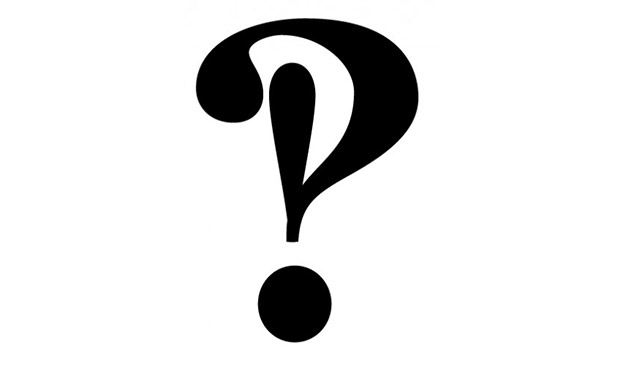
First, the interrobang (also spelled interabang). Let us take a moment to appreciate the name. It is, quite possibly, the most epic name imaginable for a punctuation mark.
Similar to this are the exclamation comma and the question mark comma.

Again, the application here is probably fairly obvious. These would be employed when you wish to convey stress or a question, but you don't want to end the sentence. The only application I can think of for such punctuation would be within brackets if you're trying to evoke an inflection, but writers often act as though words within brackets are effectively sealed off from the rest of the sentence anyway (they would think nothing of putting a question mark within a set of brackets, would they?). Useful or useless?
Slightly more elusive is the sarcastrophe. According to one source, this is what it looks like.
^
To be honest, I generally only see this one used in that cutesy quasi-emoticon: ^_^
Another source claims the sarcastrophe was imagined as...

Here are some of the other irony marks people have tried to make popular.
1. The reverse question mark.
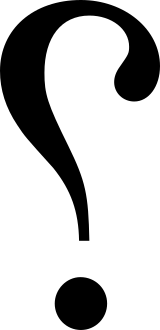
Also like this.

And, what I call the Harry Potter version...

2. Reverse italics (or sartalics).

3. Bracketed question mark.
[?]
Whether or not the sarcastrophe is real, I did find that various attempts had been made to coin a symbol to denote irony, but nothing has really been adopted on a wide scale. Scare quotes have perhaps come closest, but they are so often used wrongly that it’s not always easy to tell whether the author is trying to be clever or whether they have genuinely misused quotation marks (which is not clever!).
It has been argued by language purists that special textual emphasis on sarcasm or wit cheapens it, and that true sarcasm/wit doesn't need to draw attention to itself. If the sarcasm/wit is successful, surely it will be evident to the reader without some kind of device. On the other hand, in the digital age, sarcasm is not as easily detected in typed communication. Cultural and linguistic background can also affect one's ability to pick up on the use of sarcasm. The number of ideas circulating as to a way of denoting sarcasm suggests that this is an idea becoming increasingly relevant. The English language is changing, as it always has (and always will). Is it time for a standardised sarc-mark? Sound off in the comments.
Comments
Post a Comment